MSAC Holds 25th Annual Meeting in Vermillion Oct. 16, 2026
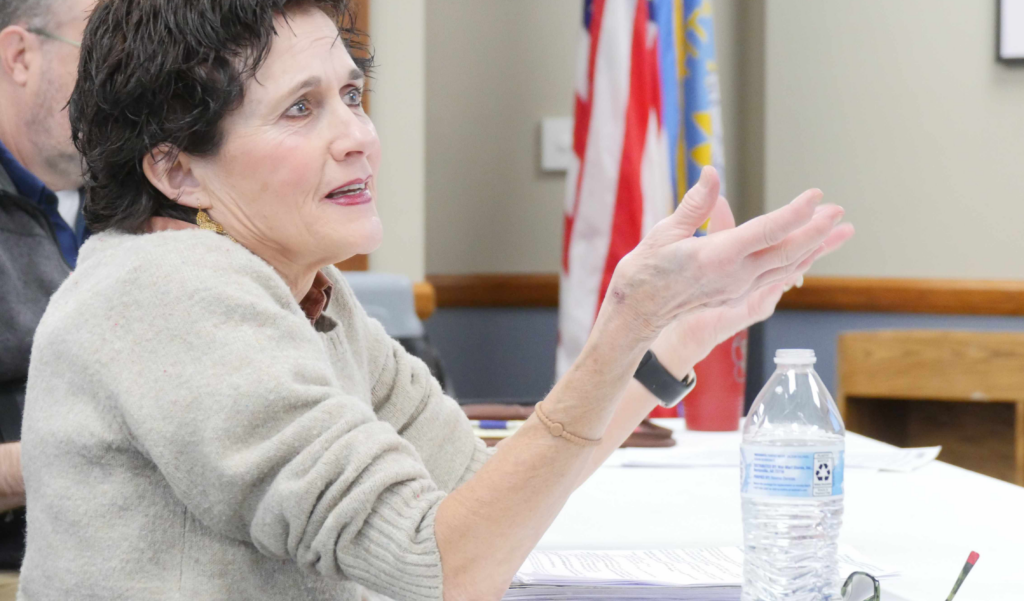
of MSAC 25 years ago in June of 2001. MSAC held its 25th Annual Membership meeting in Vermillion Friday, Oct.16, 2026.
From MSAC Reports
The battle against sediment and diminishing water storage is not a one-solution-fits-all approach. The upper Missouri River basin mainstem reservoirs, including Lewis and Clark Lake, are not alone in their lifespans shrinking.
“I think we are in a moment where there’s some momentum. We’re hitting serious enough issues, or we’re building up enough sediment in some of these reservoirs – where there’s more conversation about how we might change things,” said Josh Olson, of the Kansas Water Office in Topeka.
Via remote meeting connection, Olson visited with those attending the Missouri Sedimentation Action Coalition’s 25th Annual Membership meeting held in Vermillion Friday. Olson is the state project manager for the Tuttle Creek Lake Water Injection Dredging Demonstration. Tuttle Creek Lake is located just north of Manhattan, Kansas.
Two-thirds of Kansas residents have their water supply provided by federal reservoirs in the state. Like reservoirs on the Missouri River, the Kansas reservoirs are constantly filling with sediment from inflowing water. Tuttle Creek Lake, which provides drinking water and flood control for more than 40 percent of Kansas residents, has lost approximately half of its multipurpose storage to sediment.
The Kansas Water Office and US Army Corps of Engineers have been researching water injection dredging (WID) on Tuttle Creek Lake. It’s a technology that has been used in ports and channels, especially in Europe, but not in a reservoir before, Olson said. Traditional dredging with confined disposal facilities has a significant cost in just transport and disposal – nearly half.
“Which led us to the question of – ‘Is there a cheaper way to do this?’ One of the fundamental aspects that we were looking at was, could you just pass sediment downstream?” he said.
In collaboration with the US Army Corps of Engineers (USACE) – Kansas City District, the Kansas Water Office learned more about water injection dredging. A jet bar on the dredge injects large volumes of water at low pressure into the sediment bed. This re-suspends the sediment and creates a density current that can be passed downstream through the dam’s low-level outlets.
After years of advocating for the idea beginning in about 2018, funding came together for a demonstration project. By 2022, the state of Kansas had dedicated $2 million toward the Tuttle Creek project. Then USACE ultimately funded $7.1 million toward the $9.1 million project. The state’s effort surpasses $2 million considering supporting work completed. The primary goals were question-related to see how WID could perform and the impacts downstream.
At least 19 state, academic, USACE, private, and other federal entities are involved with this demonstration project in Kansas aimed at maximizing the value of the data gathered during the demonstration. A final technical report is expected in late March of 2027. A more detailed feasibility or major rehabilitation study with USACE, looking at a variety of alternatives, is planned for the best way to manage the sediment, Olson said.
At Gavins Point Dam in Yankton, there are no low-level outlets as there are at Tuttle Creek Dam. With WID, the density current hugs the bottom 5 to 10 feet of the reservoir.
“If we talk about how do you solve sediment management issues in reservoirs, we’re probably going to need some unique solutions that are tailored to the specific reservoirs and issues … design specifications of each,” Olson said pointing out that WID could be used to move sediment within a reservoir.
It might not be one process to get the sediment past the dam that has no low-level outlets, he said. In a general example – use WID to get the sediment closer to the dam, like the action of a broom, where something like hydrosuction sediment removal technology could move it downstream.
“Would you be able to use WID to exclusively resuspend sediment and pass it downstream? Not in that situation, but it might be part of an overall solution of maintaining the reservoir,” Olson said.
MSAC meeting attendees also heard from Tim Cowman, State Geologist and Administrator of the South Dakota Geological Survey, a program in the South Dakota Department of Agriculture and Natural Resources. He presented information about how a major aquifer interacts with the flows in the Missouri River. The Missouri River acts as an important source of recharge to the Missouri aquifer, which is a source of ground water for cities, a regional water system, and a large number of irrigation wells.

See the presentation at MSAC’s YouTube channel – see link button near top of page.
Hearing Cowman’s presentation was a good reminder for attendees how the river is a complex system and how water and sediment support our environment in numerous ways.
A general theme from Friday’s meeting was achieving sediment continuity – that sediment is part of a river system. Sediment management cannot stop with one reservoir. Olson said the conversation about sediment was starting to shift away from it being a nuisance. It’s a valuable part of the system and has other potential beneficial uses.
With the introduction of dams, systems are sediment-starved downstream. Introducing sediment downstream is moving toward a more natural state. We can’t stop sediment from entering the system.
“We have to come to terms with the reality that, that sediment is going to be in the system, and working towards sediment continuity is really necessary to have sustainability for reservoirs and not just sediment continuity at one reservoir,” Olson said.
In 2019, MSAC began the process of building a sediment management plan for the Lewis and Clark Lake region with USACE – Omaha District. In December of 2023, Phase 2 was completed. In 2024, USACE conducted a week-long bedload collector demonstration project on the Niobrara River, which contributes as much as 60 percent of the sediment entering Lewis and Clark Lake. MSAC continues to collaborate with USACE on the scope, cost and objectives of Phase 3. A starting date has not been established.
Scott Kostal, MSAC executive director, provided a brief recap of 2026 and looked forward to 2027. He has attended two reservoir sediment management summits in Kansas. Kostal applauded efforts in Knox County Nebraska aimed at locating grants for potential sediment-related projects.
“As we move into 2027, it is clear we need to place a focus on the economics and financial costs associated with the effects of sedimentation on the upper Missouri River. Areas such as how the economic impact of the river is calculated as it relates to tourism and commerce,” Kostal said adding that a true value of Missouri River water for drinking water and irrigation was needed rather than one-time replacement costs. “Getting a much more detailed picture of the true value that the Missouri River water adds to those who rely on it will shape the importance of completing the Lewis and Clark Lake Sediment Management Plan and getting real mitigation measures put into place to ensure we ‘keep it water’ well into the future.”
MSAC Board of Director Paul Lepisto, of Pierre, said that through its makeup, MSAC brings together a wide variety of Missouri River stakeholders, including local governments and businesses, landowners, power generation, and recreational interests. All of these stakeholders must be involved in the development of the management plan that will determine the future of Lewis and Clark Lake and the entire Missouri River system.
“Finding long-term, cost-effective solutions to the sediment problem won’t be easy,” he said. “But through a collaborative effort, such as the one MSAC is leading, a plan can be developed that will address the many issues and concerns of landowners and the other interests that depend on the future health of Lewis and Clark Lake and the Missouri River.”
In other business, MSAC members re-elected Mary Hurd of rural Avon; Alisha Bartling, environmental director for the Santee Sioux Nation; and Paul Lepisto of Pierre; to continue serving on the MSAC Board of Directors.
Attendees also heard an update from Shane Kinne, executive director of the Coalition to Protect the Missouri River. He provided information regarding lower Missouri River efforts. The full meeting can be viewed at MSAC’s YouTube channel.